
News
Faculty prize for Mr Timo Sewtz

Mr Timo Sewtz, doctoral student of Prof. Dr Angelika Nußberger, has been awarded the Faculty Prize of the Faculty of Law at the University of Cologne for his outstanding dissertation.
The thesis is entitled Proceduralisation at the European Court of Human Rights. The evaluation of domestic procedural quality in morally and ethically sensitive cases and was recently published by the renowned publishing house Mohr Siebeck.
The award recognises both the scientific depth and the current relevance of the topic.
Conference report: Workshop of the Academy for European Human Rights Protection - “Current crises in the light of historical experience”
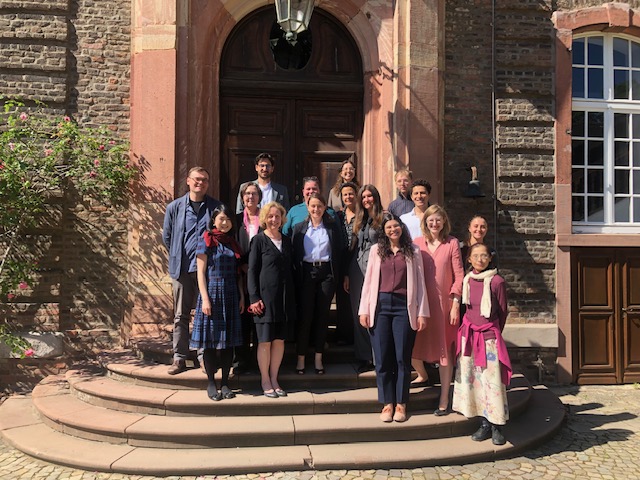
On May 13 and 14, 2025, an international workshop of the Academy for European Human Rights Protection at the University of Cologne in cooperation with researchers from the Aix-Marseille Université took place at the historic Schloss Wahn in Cologne under the title "Current crises in the light of historical experience: Normative Approaches in Germany and France".
After a welcoming address by Prof. Dr. Angelika Nußberger, Director of the Academy for European Human Rights Protection, the first panel began with the title “Memory laws vs. freedom of expression”, moderated by Prof. Dr. Angelika Nußberger, which illustrated the tense relationship between memory laws and freedom of expression in different countries. Dr. Paula Rhein-Fischer (University of Cologne) examined the German approach to remembrance legislation and analyzed in particular current debates on remembrance policy in the context of the Alternative for Germany party. Prof. Dr. Aurélie Duffy-Meunier (Aix-Marseille Université) presented the French model, while Dr. Miroslaw Sadowski (University of Strathclyde, Glasgow) analyzed the role of remembrance laws in Poland and Hungary as instruments of nationalist politics. Dr. Natasa Colodrovshi-Danelciuc (Aix-Marseille Université) concluded the panel with a contribution on the causation of Ukrainian memory laws by corresponding Russian efforts.
The second panel on the first day of the workshop titled “The Legacy of Colonialism” was moderated by Flávia Oliveira Ribeiro. Sophie Girardini, Franziska Michel and Veronika Stockinger (University of Cologne) analyzed the applicability of German laws of remembrance to the genocide of the Herero and Nama in Namibia and placed the question of reparations payments in a human rights context. Prof. Dr. Ariane Vidal-Naquet (Aix-Marseille Université) addressed the representation of the Franco-Algerian war in French politics of remembrance. Dr. Andrii Nekoliak from the Asser Institute in The Hague then presented the Russian practice of remembrance laws, focusing in particular on the sanctioning of so-called “rehabilitation of Nazism”.
The first day concluded with a lecture by Prof. Dr. Stéphanie Hennette-Vauchez (Université Paris-Nanterre) on the topic of “Gender and Justice: The Future of Women Judges at the European Court of Human Rights”, which was organized in connection with a research project by Dr. Cathérine Van de Graaf and took a critical look at the development of gender dynamics at the European Court of Human Rights.
The second day of the workshop began with a panel moderated by Dr. Paula Rhein-Fischer from the University of Cologne. Reza Khabook (University of Cologne) examined the extent to which laws exist in the MENA region to combat anti-Semitism, with a particular focus on Iran. Dr. Michael Riepl (University of Cologne) addressed the legal treatment of the Armenian genocide in Germany, France, Armenia and Turkey. The panel was concluded by Prof. Dr. Carine David (Aix-Marseille Université), who dealt with the legal processing of colonial responsibility towards overseas population groups. She raised the question of what purpose the French recognition of slavery as a crime against humanity serves.
The final panel, chaired by Anna Stepanskaja, dealt with the role of memory in preventing violence. Prof. Kristin Platt (Ruhr University Bochum) shed light from a sociological perspective on the role of violence prevention and in particular the importance of collective memory in preventing violence. Dr. Alexander Korb, Director of the Memorium Nuremberg Trials, spoke about historical challenges in connection with the definition of genocide. Prof. Dr. Claus Kreß (University of Cologne) provided the final impulse, tracing the development of international criminal law as an instrument for maintaining peace and security and discussing the different roles of both concepts.
In a concluding discussion, central topics of the last panel were brought together, with a particular focus on a critical evaluation of the crime of genocide and the question of how selective prosecution of international crimes can be avoided.
The workshop facilitated a fruitful and interdisciplinary exchange between German and French academics and international guests and provided valuable impetus for the legal debate on memory and its role in times of crisis.
We are so proud to announce that our Cologne Team advanced to the Semi-Finals of the Final Round of the Helga Pedersen Moot Court Competition in Strasbourg last week!


We are so proud to announce that our Cologne Team advanced to the Semi-Finals of the Final Round of the Helga Pedersen Moot Court Competition in Strasbourg last week!
This is a huge achievement: our Mooties ranked among the top four teams out of over 60 teams in this year’s competition, making them the best German team of this year!
After nine months of hard work, two written submissions, several pleadings at the university—judged, among others, by Prof. Angelika Nußberger and many dedicated former Moot Court participants—two pleadings at the law firms Cleary Gottlieb Steen & Hamilton and Redeker Sellner Dahs, and countless meetings with our dedicated coaches Sophie Girardini and Veronika Stockinger, this result is a well-deserved highlight of a successful Moot Court year.
Last week, Alessandra Reputin, Mounira Hssaine, Julie Dovern, and Nil Su Ketenci did an amazing job: they supported each other, handled the pressure and challenging questions from the judges, and stayed flexible and adaptive throughout the competition.
They not only convinced the judges but also connected with many other participants—building lasting friendships with fellow human rights enthusiasts from across Europe. This is surely only the start of their bright future in human rights and their successful legal careers in general.
We couldn’t be happier for Mounira Hssaine, who was awarded Best Orator of this year’s quarter-finals—an outstanding personal achievement!
Congratulations to the winning team from Charles University Prague and the runner-up team from IE University Madrid!
Thank you to the University of Cologne, the Verein zur Förderung der Rechtswissenschaft, and the Karl-Heinz Böckstiegel Foundation for supporting us; to ELSA International, the Council of Europe, and the European Court of Human Rights, including all the many lawyers who took the time to act as judges, for making this journey possible.
Moot Courts remain a beautiful experience, both for students and the university teams supporting them! It has been a honour to be part of this journey! Go team 19!
Prof. Nußberger as a guest on Deutschlandfunk
Prof. Nußberger was a guest on Deutschlandfunk radio on the topic of “Human rights under pressure”.
In the 7-minute interview, she spoke about current developments in the field of human rights, in particular the push to reinterpret the European Convention on Human Rights.
The Academy in Oxford
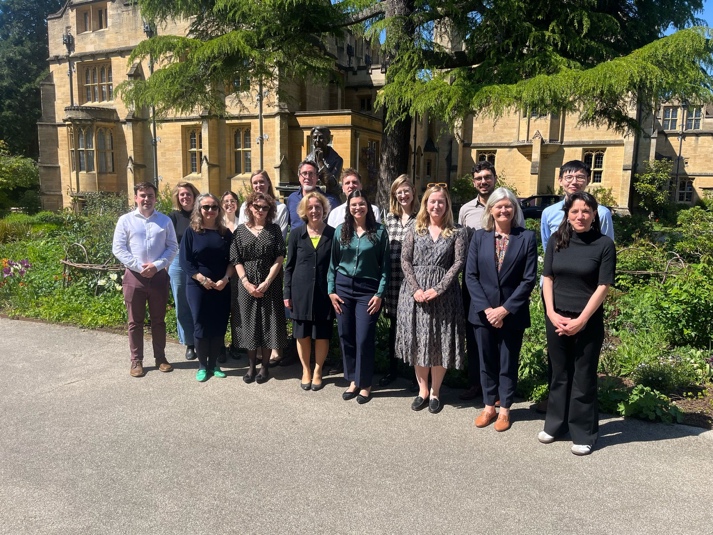
‘The future is certain, but the past is unpredictable.’
This was a popular joke in the Soviet Union that has lost none of its poignancy to this day. On 30 April and 1 May, the teams from the Academy for European Human Rights Protection and the Bonavero Institute at the University of Oxford met to discuss the culture of remembrance and the right to remember. The workshop was entitled ‘Memory and Speech - From Benign Neglect to Authoritarian Prohibition’ and brought together academics from both partner institutes as well as researchers from other universities, in particular Warsaw and Copenhagen. The event was part of the international joint project Memocracy (https://memocracy.eu/), which analyses the historical and cultural war in Central and Eastern Europe today.
In Oxford, however, the participants broadened their view beyond Europe's borders and also discussed case studies from Africa, the South Caucasus and Latin America. The Director of the Bonavero Institute, Kate O'Reagan, and the Director of the Academy for European Human Rights Defence, Angelika Nußberger, contributed their practical experience and explained the role that courts and truth commissions can play in the culture of remembrance.
Fundamental questions were also discussed. How can collective remembrance be controlled? Are state restrictions an effective means of doing so? And should lawyers leave the field of history entirely to historians?
The time-honoured backdrop of the university city of Oxford proved that history can also be inspiring. Not only the historic colleges and chapels, but also the traditional May Day celebrations showed that history creates identity. All states, whether liberal or authoritarian, will continue to pursue history policy in the future in order to define their identity. The workshop was therefore also intended to explore where the boundary between valuable remembrance culture and harmful distortion of history lies.
A publication of selected contributions is planned. We would like to thank the Bonavero Institute for its hospitality and the Volkswagen Foundation for its financial support within the framework of Memocracy.
German-language Master's course on German law starts in the summer semester in Cologne

Welcoming the Georgian students on Thursday, 10.04.
As part of the Master's program in German Law, which has been running since 2007 and is a cooperation between the law faculties of the University of Cologne and the Ivane Javakhishvili State University of Tbilisi (Georgia), the students of the current year were warmly welcomed last Thursday.
After successfully completing the winter semester in Tbilisi under the guidance of Cologne lecturers, six Georgian students are now continuing their Master's studies in Cologne. The program coordinators, Professor Angelika Nußberger and Professor Christian von Coelln, welcomed the group at the Academy for European Human Rights Protection.
The aim of the DAAD-funded course is to obtain an LL.M degree from the University of Cologne, to teach the basics of the German legal system and to develop skills in the comparative law of two legal and state systems.
Welcome to Cologne!
Prof. Nußberger as a guest on the NDR television format “DAS!”
On May 9, Prof. Dr. Angelika Nußberger, university professor and former Vice President of the European Court of Human Rights, was a guest on the NDR program “DAS!”. The discussion focused on the importance and global validity of human rights - topics that she also explores in her current book “Free and Equal - Human Rights”. With her expertise, she provided insights into the challenges and opportunities of human rights work and emphasized the central role of freedom, equality and human dignity.
Watch the entire broadcast here. [German]
Dr. Michael Riepl as a guest on the Weltspiegel podcast

Dr Michael Riepl, an employee of the Academy for European Human Rights Protection, was recently a guest on ARD's Weltspiegel podcast.
In the episode ‘World War II: German prisoners of war in the USA’, he spoke about the importance of the Geneva Convention for the protection of prisoners of war.
Dr Riepl, who previously worked for the International Committee of the Red Cross, explained how international legal norms influenced the treatment of German prisoners in US camps during the Second World War.
The episode offers historical insights and shows how international humanitarian law was applied in practice.
The podcast is available here in the ARD Audiothek. [German]
The Academy in deep mourning

Lorenz Wielenga, PhD student at the Academy for European Human Rights Protection since January 1, 2022, passed away on April 25, 2025 after a long, serious illness at the age of 28. With his kindness and warmth, his sensitivity, his social commitment and also with his wealth of ideas and academic brilliance, he was a role model for everyone.
We will name our library the Lorenz Wielenga Library after him and keep his memory close to our hearts.
Small Numbers, Big Presence: Jews in Poland after World War II | Book launch and discussion with Stanisław Krajewski
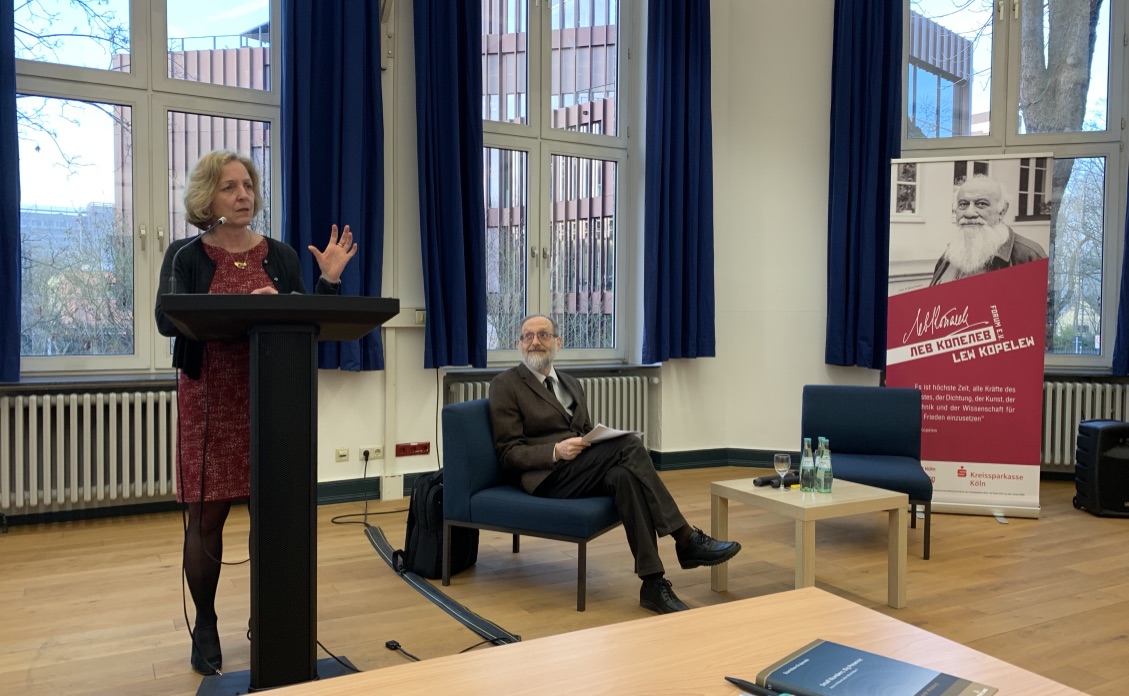
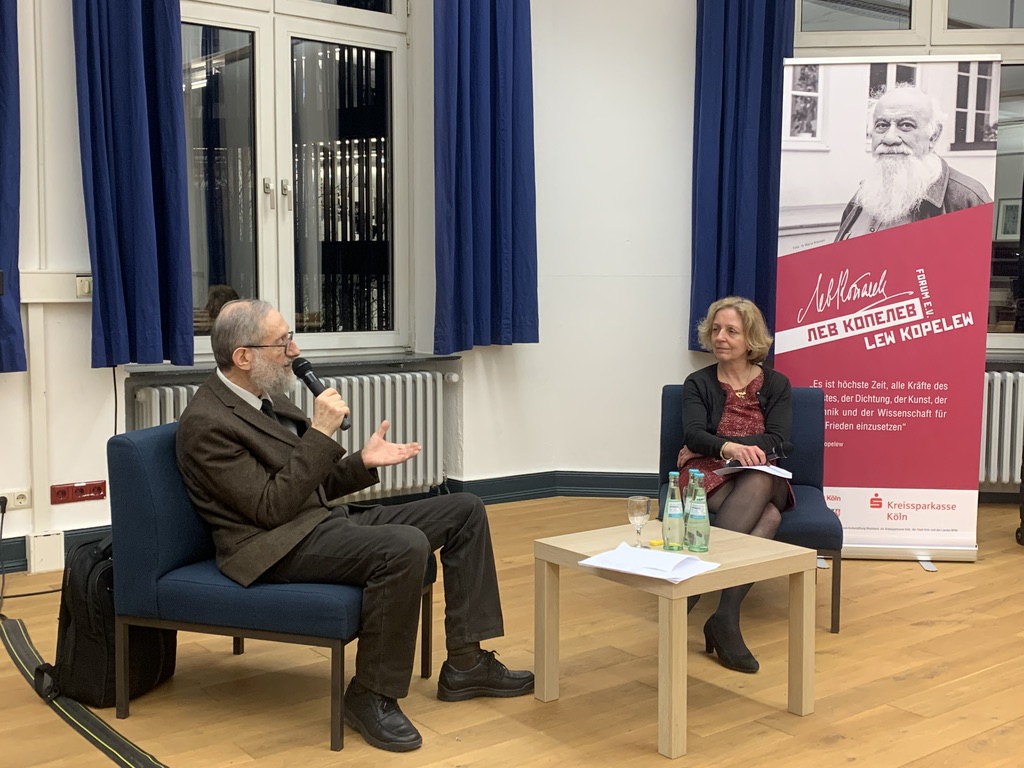
Small Numbers, Big Presence: Jews in Poland after World War II
Book launch and discussion with Stanisław Krajewski
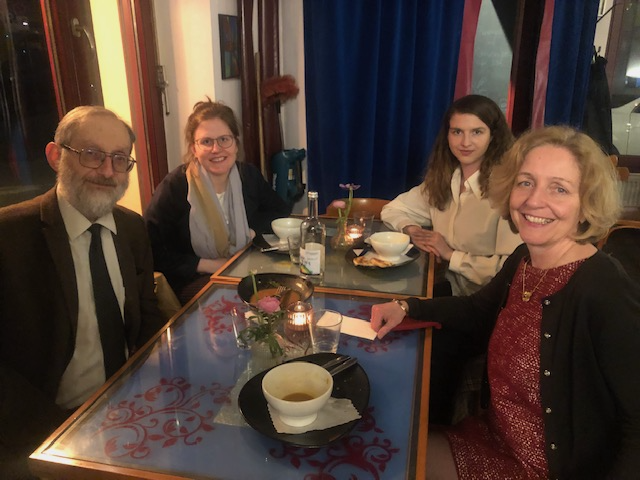
On March 10, 2025, Stanisław Krajewski, Professor of Philosophy at the University of Warsaw, was a guest at the Academy for European Human Rights Protection at the University of Cologne and presented his book Small Numbers, Big Presence: Jews in Poland after World War II (Peter Lang), published in 2024. Against the background of the great importance of Polish Jewry for Jewish religious traditions on the one hand and its almost complete annihilation in the Shoah on the other, Stanisław Krajewski, influenced by his personal experiences, traces the development of Jewish life in Poland from 1945 to the present day. In his lecture, he gave an overview of the period since the Second World War, which he described as a new, albeit narrower, chapter in the thousand-year history of Jewish life in Poland, focusing in particular on questions of remembrance.
Stanisław Krajewski identifies the anti-Semitic campaign initiated by the Communist Party leadership in 1968 as the first decisive event. Until then, Polish Jews who had survived the Shoah and the war and decided not to emigrate had striven to assimilate and “flee from the memory” of their Jewish roots. Many had thus turned to the communism that prevailed in Poland at the time, usually trying to be “as non-Jewish as possible”. The anti-Jewish smear campaign of 1968, as a result of which at least 13,000 people were forced to leave the country, was a turning point and became a formative experience for the Jewish post-war generation, to which the author also belongs.
While Jewish institutions were barely visible or in crisis in Poland until 1989, a process that Krajewski describes as de-assimilation began after the fall of communism and continues to this day: a (re-)rapprochement with one's own Jewish roots, an ever-increasing importance of Jewishness for one's own identity, which takes its place alongside Polish identity without replacing or pushing it back. This development went and still goes hand in hand with a rapidly growing general interest in everything Jewish in Poland. One of the factors that promoted de-assimilation was also the interest of the Catholic Church in a dialog with people of Jewish faith. As a co-founder of the Polish Council of Christians and Jews in 1989, Stanisław Krajewski is still committed to Christian-Jewish encounters in Poland today. At the end of his lecture, he spoke about some of the challenges in the dialog, but also its concrete forms. In the subsequent discussion, moderated by Angelika Nußberger, Director of the Academy for European Human Rights Protection, these and other questions were discussed in greater depth.
The event was a cooperation between the Cologne-Bonn branch of the German Association for East European Studies (DGO) and the Lew Kopelew Forum. It was funded as part of the research project Memocracy - The Challenge of Populist Memory Politics for Europe: Towards Effective Responses to Militant Legislation on the Past.